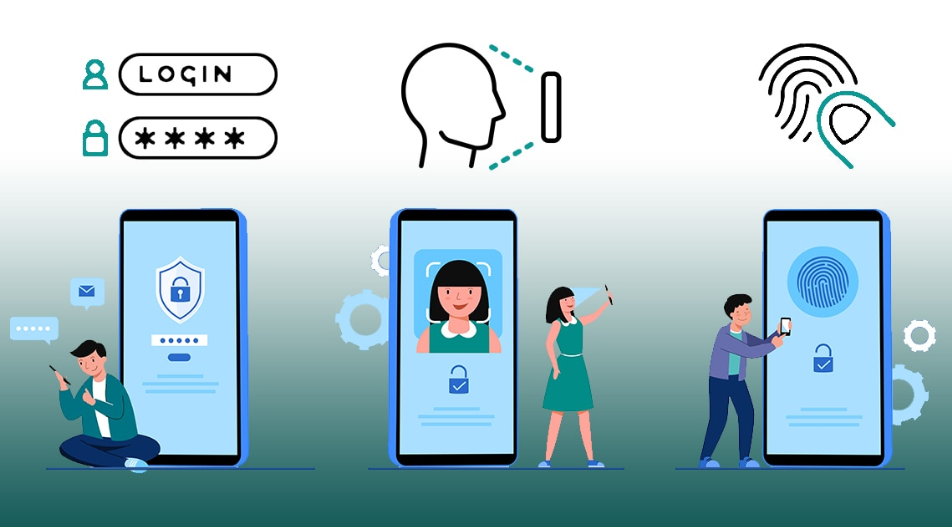

Continuous authentication and multi-factor authentication offer a layered defense: MFA strengthens the initial login, while continuous signals sustain risk-aware access control during a session. Evidence-based practice notes how MFA reduces immediate compromise but may miss post-login drift; continuous methods detect anomalies and adapt to context. The architecture choice hinges on threat models and session exposure. Stakeholders should weigh integration costs and governance, then map a practical, resilient path forward that leaves room for escalation and review.
What Continuous Authentication Is and Why It Matters
Continuous authentication is a security paradigm that continuously verifies a user’s identity during an active session, rather than relying solely on a single initial login. It assesses behavioral signals and contextual evidence to detect anomalies.
Concept drift and session hijacking risk inform architecture choices, emphasizing continuous monitoring, adaptive thresholds, and robust telemetry to sustain access control without constraining freedom.
How MFA Blocks Breaches at Login and What It Misses
MFA blocks breaches at login by requiring a second factor beyond the user’s password, converting a single-authentication event into a multi-step decision that binds possession or knowledge to a verified user.
From an architecture perspective, this reduces risk through layered controls, yet introduces login friction and potential blind spots, where breach prevention depends on factor resilience and contextual verification.
See also: Cloud Workload Protection vs Endpoint Security
When to Use Each Approach (And How They Complement Each Other)
In practice, organizations should select authentication approaches based on risk context, asset value, and threat model, recognizing that neither continuous authentication nor multi-factor authentication alone suffices in all scenarios.
Selection balances continuous risk with observable user behavior, deploying MFA for high-value assets and monitored sessions, while continuous authentication guards dynamic risk exposure.
Complementarity emerges through layered telemetry, architecture alignment, and adaptive trust.
Practical Framework to Build a Layered Authentication Strategy
A practical framework for layering authentication starts with a clear mapping of assets, threat models, and user workflows to define where and how telemetry should be captured, evaluated, and acted upon.
The approach emphasizes data governance, user privacy, and minimal data exposure, ensuring risk-aware decisions, evidence-based controls, and architecture-focused alignment that respects freedom while maintaining robust, layered defenses.
Frequently Asked Questions
Can Continuous Authentication Replace MFA Entirely?
Continuous authentication cannot fully replace multi factor security guarantees; it complements MFA, enabling continuous risk assessment and adaptive controls. Architectures should balance friction and usability, acknowledging potential privacy and false-positive risks while pursuing evidence-based, risk-aware security improvements.
How Does User Behavior Variability Affect Reliability?
Behavior variability reduces reliability; like a weather vane in gusts, it shifts. The reliability impact depends on adaptive models and thresholds. Architecture-focused evidence suggests continuous authentication must accommodate drift, calibration, and user tolerance to maintain risk-aware security.
What Are the Cost Implications of Adding Continuous Signals?
The cost impact depends on data infrastructure and signal processing needs, while deployment complexity grows with integration, monitoring, and policy tuning; evidence suggests incremental ROI through risk reduction, yet architecture choices must balance freedom, scalability, and operational burden.
Are There Privacy Concerns With Biometric or Device Data?
Biometric or device data raise privacy concerns, particularly regarding retention, purpose limitation, and consent. From an architecture perspective, robust data governance reduces risk, enabling lawful processing, audit trails, and storage minimization while preserving flexibility for user autonomy and freedom.
How Do Regulatory Requirements Impact Implementation Choices?
Like a map inked in caution, regulatory impact guides implementation choices. The approach remains risk-aware and evidence-based, architecture-focused; compliance dictates data handling and audit trails, shaping integration, privacy, and interoperability while preserving user autonomy and freedom.
Conclusion
In sum, continuous authentication and MFA together form a resilient, layered defense that adapts under risk and over time. MFA reduces initial compromise, while continuous signals detect drift and hijacking during active sessions. An evidence-based view shows organizations that deploy both layers experience lower breach rates and faster containment. If one statistic helps visualize impact: studies indicate continuous authentication can cut post-login risk exposure by up to 60% in high-velocity environments, underscoring the value of perpetual verification within a robust architecture.
